

In outdoor and complex working conditions,wires and cables often face challenges such as moisture,ultraviolet rays,oil stains and mechanical wear.Silicone heat shrink tubing,with its strong weather resistance,UV resistance and high flexibility,has become a commonly used cable protection material in outdoor engineering and equipment.
One of the advantages of silicone heat shrink tubes is their strong weather resistance.When exposed to sunlight and high humidity for a long time,ordinary heat shrink tubes are prone to aging and cracking,while silicone material can better maintain flexibility and insulation performance.This makes it particularly suitable for photovoltaic cables,Marine equipment and outdoor power systems.Silicone heat shrink tubes also demonstrate certain corrosion resistance for equipment that needs to operate in environments with oil stains or chemical media.
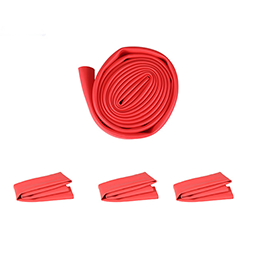
In terms of installation,the shrinkage temperature of silicone heat shrink tubes is generally around 150℃.When in use,it is necessary to control the heating time and temperature well to avoid excessive roasting which may cause the surface of the tube to carbonize.For large-scale production or industrial environments,it can be used in conjunction with automatic heating equipment.It is recommended to keep the inside of the pipe clean during construction to avoid dust or grease affecting the fit after shrinkage.
In addition,silicone heat shrink tubes can be classified into thin-walled and thick-walled types based on their wall thickness.Thin-walled types are suitable for scenarios with limited space and the need for flexibility,while thick-walled types have more advantages in terms of wear resistance and mechanical protection.For high-voltage transmission systems,it is also necessary to select models that meet relevant standards to ensure stable operation.
With the development of new energy vehicles,5G communication equipment and smart home appliances,the application scope of silicone heat shrink tubes is constantly expanding.Correctly understanding its characteristics and choosing the appropriate product in combination with actual needs will provide a solid guarantee for the reliability of the electrical system.

